Scuba-Diving · Indonesien und Philippinen

► Deutsch

Lembeh Strait – Day 8

Diving in Indonesia, especially the Lembeh Strait, offers extraordinary experiences. The special thing about muck diving, diving in mud and sand, is the often very bizarre-looking marine life.

The fascination begins with larger creatures. It becomes truly amazing with the smallest ones, provided you know where and how to find them.

This video was filmed during my dives in October 2025 in the northern tip of North Sulawesi, west of Manado.
Some excerpts from the video

Identifying the species of the animals isn't easy for me, as I'm not an expert. Dive guides are a great help here. Internet help is also available, but it's often difficult to find the right species.

If you find any discrepancies, please let me know. The best way is via E-Mail.

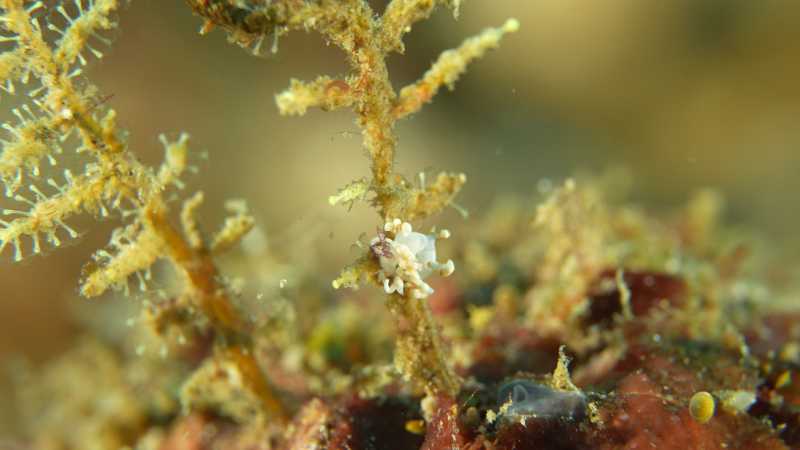
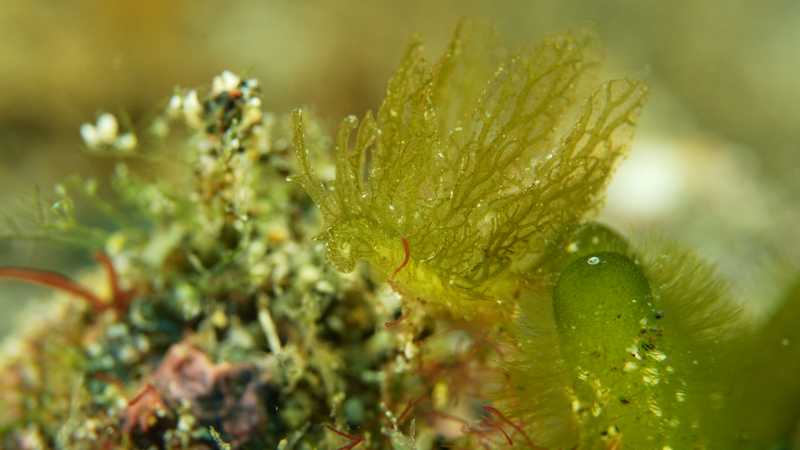
This is probably a Caliphylla.
Although they are often called nudibranchs, Caliphylla are strictly speaking Sacoglossa, or juice-sucking sea slugs, and differ from true nudibranchs in their diet and biology, even though both are colorful sea slugs.
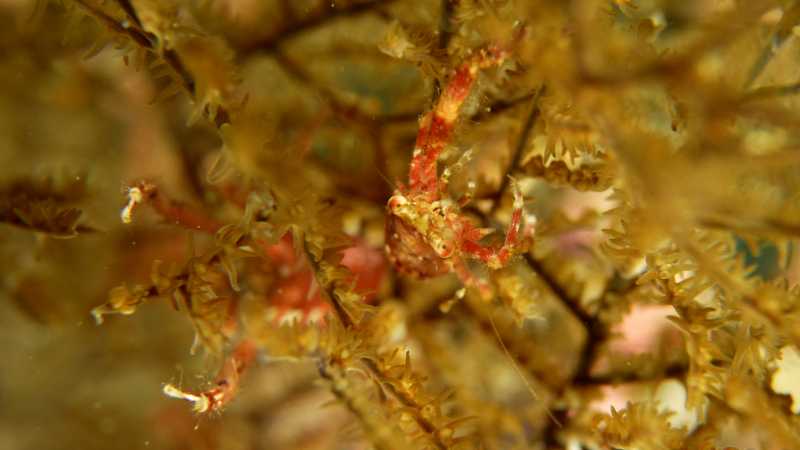
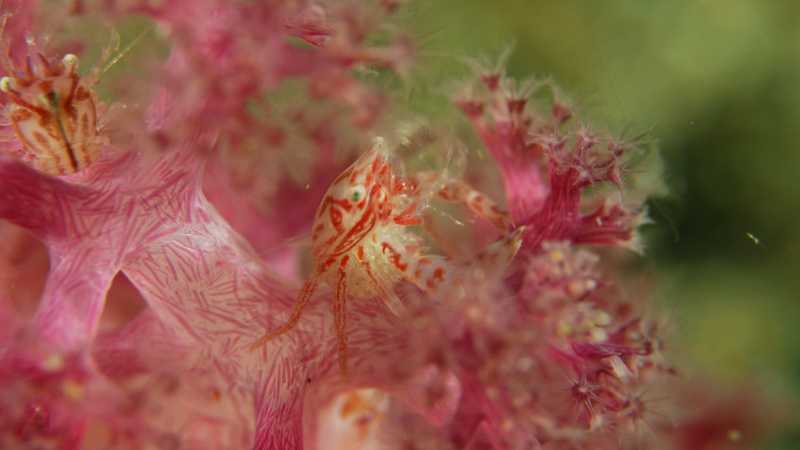
Soft coral porcelain crab (Lissoporcellana nakasonei).
They are not true crabs, but anomura, more closely related to hermit crabs. Their striking red and white coloration and pattern serve as camouflage in their natural habitat, soft corals.
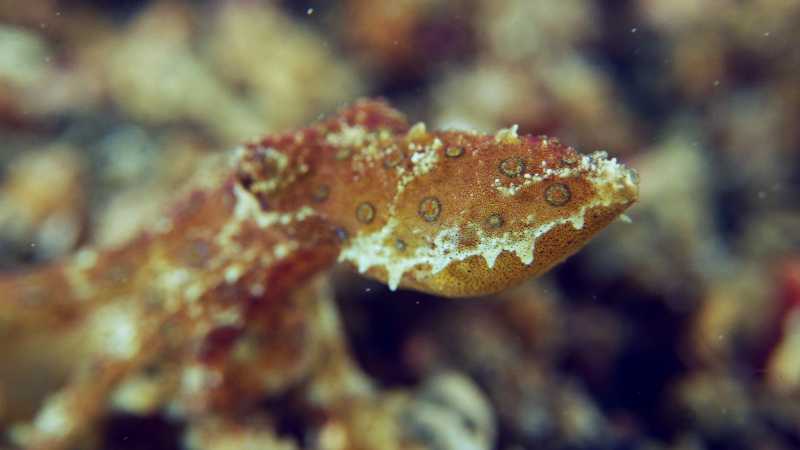
Blue-ringed octopus. One of the most venomous marine animals in the world.
They use their bright blue ring pattern as a warning signal (aposematism) when they feel threatened. Their neurotoxin, tetrodotoxin, is extremely potent and can be fatal to humans, for which there is no antidote. They are nocturnal hunters that feed mainly on small crabs and fish.
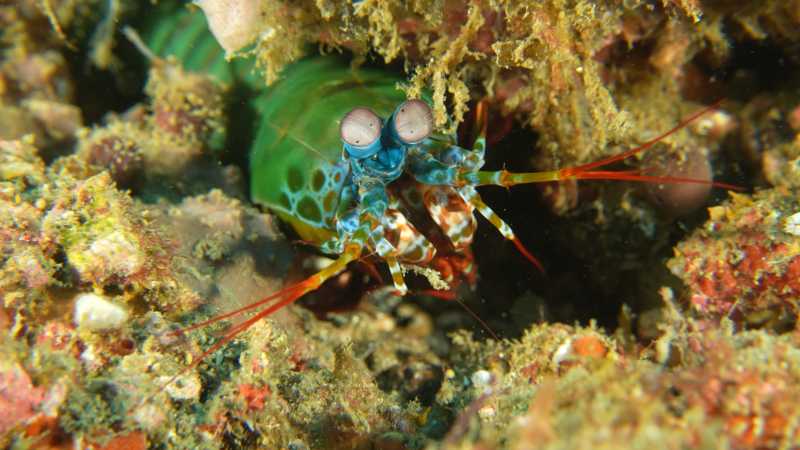
Peacock mantis shrimp. (Odontodactylus scyllarus).
hammerhead doto (Doto amyra).
A species of nudibranch.
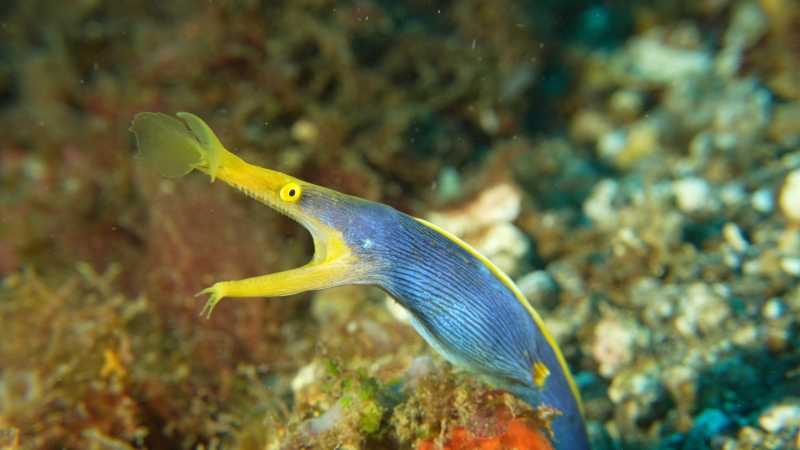
Adult male banded moray eel (Rhinomuraena quaesita).
This species is a protandrous hermaphrodite, meaning it begins its life as a male (black phase), then goes through the blue male phase (as shown here), and finally becomes a female (yellow phase).
Black squat lobster (Galathea squamifera)
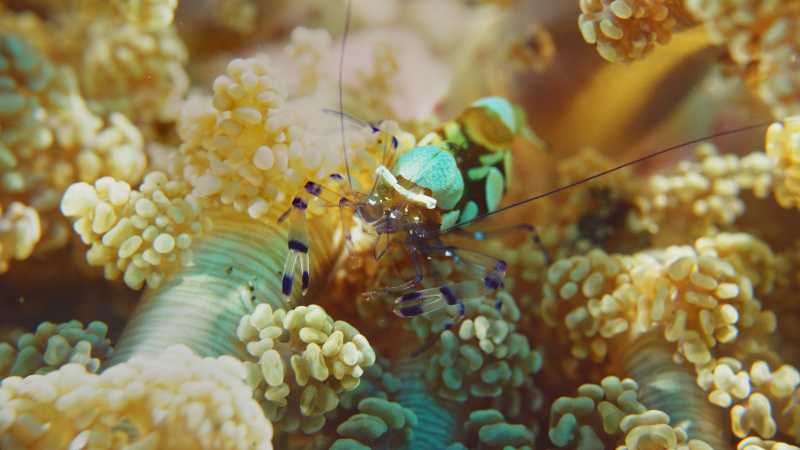
Peacock-tail Anemone Shrimp (Periclimenes brevicarpalis).
Also known as the glass anemone shrimp. Its body is mostly transparent with white spots, and its tail fan has distinctive orange spots with black edges. This species lives in symbiosis with sea anemones, using their stinging cells for protection against predators.

The Problem with Focus

With a camera, you reach the limit of just a few millimeters of tolerance to the optimal focus point. Anything beyond that will be blurry. It's difficult because I'm free-swimming. The currents move not only me, but also the small creatures. A tripod would sometimes be helpful. I don't have one, because my diving gear is already heavy enough.

It's somewhat easier with pure photography using flash. A higher resolution than with video is also easier to achieve.

Video is more difficult because the tiny creatures need to be in focus for a longer period of time.

But moving images show much more action!

My Photographic Equipment

For quite some time now, I've been using a Sony A1 as my camera for indoor use. It now also has a Nauticam underwater housing. For lenses, I use a 60mm zoom and two macro close-up lenses, which I can attach underwater as needed. I also use two X-Adventurer lights. They are suitable for video and flash photography.

For video post-processing, I use DaVinci Resolve from Blackmagic. For photos, I use Lightroom and Photoshop from Adobe.

View - Fullscreen

You can watch videos in full screen. To do this, click the square in the bottom right corner of the video:

VideoFullscreen

Technical Information

The video is created in high compression in MP4 - H.265 format. A current codec is required. Older video players and PCs may not be able to display it.

If you only hear the audio, you need to install support for the HEVC video format.

For Windows, this extension is available in the Microsoft Store. It costs one Swiss franc.
The extension is also included free of charge in the VLC media player: VideoLAN.org